History
"Make Love on Ibiza,
Not War in Vietnam"

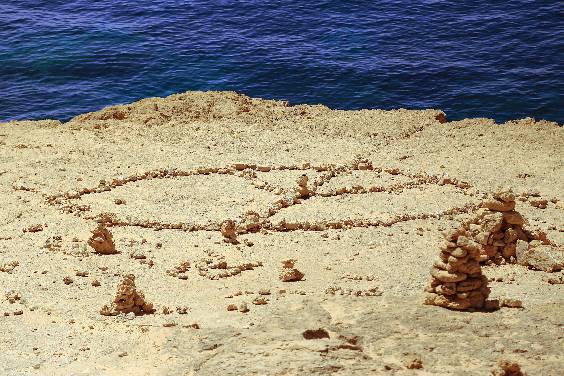
Ibiza was an important center of the hippie movement in the 1960s and 1970s. In the early 1960s, Ibiza was a very remote and quiet island. Small farmers rarely left their farms except to attend church on Sunday. If goods were moved at all, it was mostly done by oxcart. Time seemed to have stood still on Ibiza for decades. And that is exactly what made the island so attractive to a certain type of hippie.
The Beginnings
In the U.S., the hippie movement evolved, and places like San Francisco had already become centers of this culture. The only problem was that the U.S. was engaged in the Vietnam War. By the late 1960s, American involvement in Vietnam had reached its peak.
At that time, recruitment for the U.S. armed forces was based on the so-called Selective Service System, which meant that male U.S. citizens between the ages of 18 and 25 could be drafted for military service, including the obligation to go to war. One way to avoid this was to go abroad.
Ibiza was a very attractive destination: as mentioned, it was remote, had a low cost of living at the time, and was sunny. However, going there still required sufficient funding. As a result, most of those arriving on Ibiza were well-educated, middle-class people with families who could support their lifestyle—free of work, military service, and other unwanted obligations. Their lifestyle differed drastically from that of the Ibiza locals. But the locals didn’t mind and mostly embraced their arrival. Ibizans are known to be open-minded. And of course, the influx of U.S. money benefited the local economy. In fact, they could coexist; at that time, there was enough space on the island.
Word spread, and Ibiza became the place to be for people seeking an alternative lifestyle. Wealthy kids lacking guidance attract “friends” who know how to take advantage. So the less fortunate—and sometimes criminal—type of hippie arrived on the island.
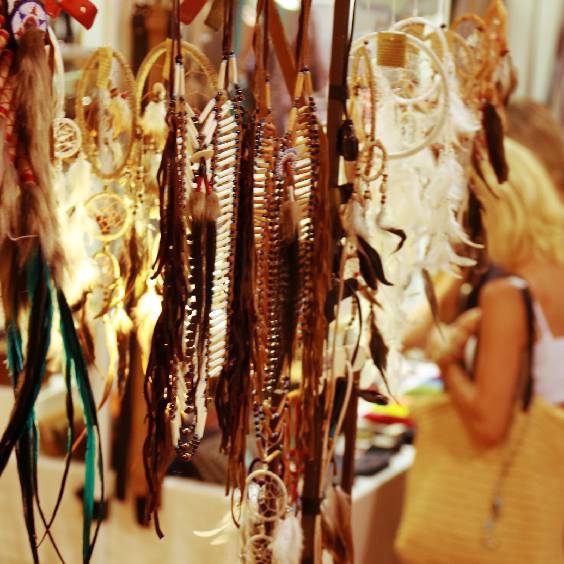
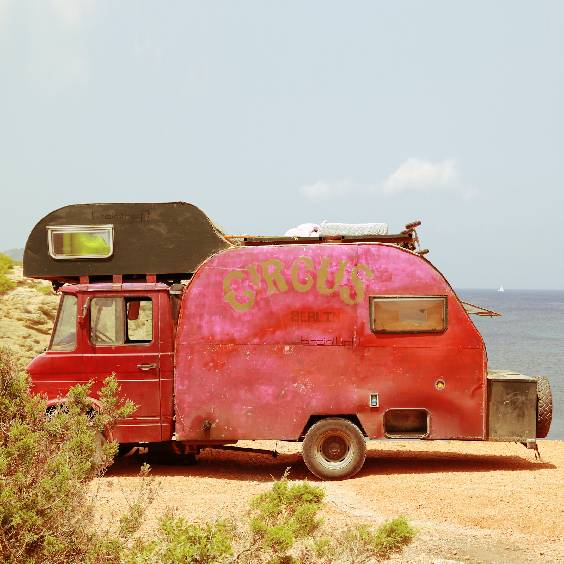
In the late 1960s, among European hippies, it was popular to go on a road trip to India, traveling the so-called Hippie Trail. Typically, they used a small van. Some hippies had their summer residence on Ibiza and spent the winter in places like Goa, India. On their way back, they would bring flashy jewelry, cult objects, and sometimes drugs to Ibiza to sell during the summer.
The Jet Set Joins
Hippie culture became more and more mainstream. Trendy and fashionable people from all over the world were also attracted to Ibiza. The island became a destination for the jet set. The majority of the local population still lived in a completely different world. Some among them were clever and seized the opportunities to enter the tourism business. At that time, nightclubs opened. The still-operating nightclub Pacha opened in 1973, and Amnesia in 1976. At the beginning, the expat scene was small. So in one nightclub, first-generation hippies, second-generation hippies, the jet set, European starlets, and proto-party tourists all partied on the same dance floor next to each other.
The Movie "More": Pointing Out the Dark Side
A French movie titled "More" (1969) provides intense insight into hippie culture and especially drug abuse on Ibiza. It was directed by Barbet Schroeder and stars the then-famous American actress Mimsy Farmer as Estelle. The movie became popular, partly due to its soundtrack by Pink Floyd. Though the film is more cautionary than flattering, it boosted Ibiza’s popularity.
The plot follows a young, wealthy woman named Estelle, who lives the hippie lifestyle, and Stefan, a German college graduate. During their first encounter in Paris, Stefan tries to steal Estelle’s money with a criminal friend. But Stefan is fascinated by her, and they meet again later. She invites him to Ibiza, and he accepts. Once on the island, Estelle introduces Stefan to all kinds of drugs and the concept of free love. Their behavior becomes increasingly erratic. The film’s title More reflects this escalating excess. At the end—perhaps unsurprisingly—Stefan dies from a drug overdose.
What About Today?
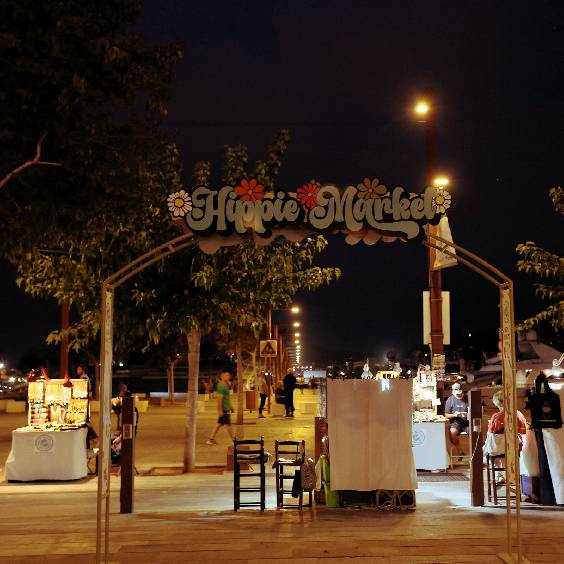
The era of the hippie movement is inevitably gone. A few of the original hippies are still around on the island. It is widely accepted that hippie culture is a part of Ibiza’s cultural heritage—at least in its more positive and idealized form. The hippie movement had a major influence on the Ibiza we know today. There are some reminders and opportunities to reminisce. Some people claim to be “hippies.” Others are much closer to the original hippie ethos and strictly reject the label "hippie."
Places to see:
- Las Dalias Market
- Hippie Market Punta Arabí
- Smaller Markets
- Hippie Monument
- Theme Parties
- Fashion Stores
Continue reading and learn about the things that make Ibiza unique.